
Julian Thorne
Crypto analyst and guide author. Making complex technologies clear for everyone.
What is a Trading Pair in Crypto
Table of Contents
Trading pairs are the foundation on which the entire world of financial markets, including cryptocurrencies, is based. They are a universal tool that allows you to easily understand how much one asset is worth compared to another. If you've ever wondered how coins are traded on an exchange, the answer is simple: through trading pairs.
In this article, we explain in more detail what trading pairs are and what types of them exist.
What Is a Trading Pair?
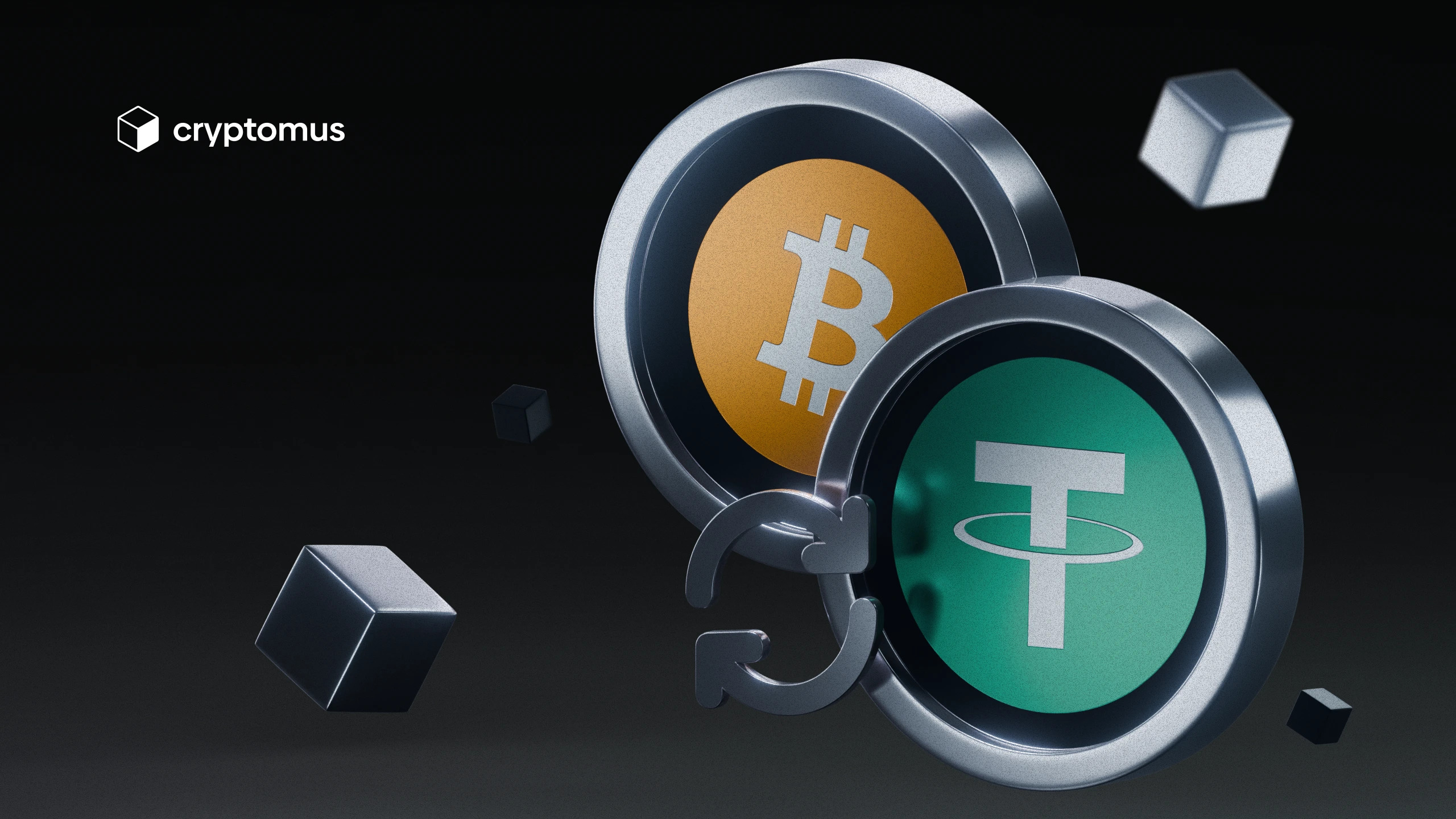
A trading pair in crypto is a couple of assets that shows the exact exchange ratio between two different assets in real time. It is within these pairs that trading takes place on the cryptocurrency market.
Visually, any pair, such as BTC/USDT, always consists of two assets separated by a slash (/). They include:
1. Base asset (the one on the left, e.g., BTC). This is the asset you are buying or selling.
2. Quoted asset (the one on the right, e.g., USDT). This is the “currency” in which the price is expressed. Most often these are stablecoins.
If the price of the BTC/USDT pair is $70,000, it simply means that 1 BTC is worth 70,000 USDT. Once you understand this simple logic, you will be able to understand any exchange quote.
This simple idea makes trading fast and easy to understand, creating a continuous flow where, after selling one asset, you can immediately buy the next one, and so on.
How to Trade Crypto Pairs?
A cryptocurrency exchange operates like a large marketplace where individuals who wish to buy and sell assets come together. This exchange occurs through a process called matching. Makers place an order at a price that differs from the current market price and wait for someone to agree to it. Their order first goes into the order book where other orders are kept, creating (or making) liquidity. That is why they are called “market makers”.
Takers place an order that is executed instantly due to existing orders in the order book. They take liquidity.
Success in trading depends on choosing liquid pairs and understanding how the exchange works. Generally, trading cryptocurrency pairs involves three basic steps:
1) Select a pair with high liquidity that suits your goals.
2) Analyze the direction of the underlying asset relative to the quoted asset using charts and indicators.
3) Place an order (market, limit, or stop-limit) to exchange one asset for another using the exchange order book.
Example of Trading Pairs
Trading pairs measure the ratio of the coin's price to traditional fiat currencies or another crypto.
Cryptocurrency to Fiat
This is a direct pair where the value of the coin is measured in a traditional fiat currency, such as the US dollar (USD) or the euro (EUR). In this case, it looks like BTC/USD and BTC/EUR. The advantage of such pairs is that you can immediately see your profit or loss in a currency you understand.
But there are also disadvantages. Such pairs are rare and not available on all exchanges.
Cryptocurrency to Stablecoin
This is the most popular format. A stablecoin is a digital coin whose value is equal to the value of physical assets, such as the dollar, euro, gold, or oil.
The most well-known stablecoins are Tether (USDT) and USD Coin (USDC), as their value is pegged to $1. They allow you to trade between volatile coins (which constantly change in price) and the stable value of the dollar without withdrawing money from the exchange. In this case, the pair would look like BTC/USDT or BTC/USDC.
This method allows you to instantly lock in your profit or loss by converting your coins to stable and safe assets.
Cryptocurrency to Cryptocurrency
In these pairs, both coins—the base and the quote—are constantly changing in price (e.g., BTC/ETH). Traders use this type of exchange when they think that one coin will grow faster or fall slower than the other. If you buy BTC/ETH, you are betting that Bitcoin (BTC) will perform better than Etherium (ETH).
The main risk here is double volatility. If the price of BTC falls while the price of ETH rises, you lose money in two directions at once. Such pairs are more complex. These pairs are not available on all platforms. But you can always take a detour. That is, instead of buying Bitcoin directly for Ethereum, first sell Ethereum for USDT (ETH/USDT), and then buy Bitcoin for the USDT you received (BTC/USDT).
Why Are USDT and USDC Dominant in Trading Pairs?
The main reason for the dominance of these stablecoins such as USDT and USDC is that their value is pegged to the US dollar. This is convenient, so allows them to be widely used around the world.
Also stablecoins have become indispensable because they solve the problem of ensuring continuous and instant settlements in a 24/7 market.
USDT and USDC are used as quoted assets due to their stability and widespread use in the cryptocurrency market. Their stable price allows you to effectively lock in profits or losses as if you were trading with regular dollars.
Most Liquid Trading Pairs
Liquidity is the most important characteristic of a trading pair. If a pair is liquid, it means that you can buy or sell an asset quickly and without significant price changes. The higher the liquidity, the lower your costs. Moreover, high liquidity means high demand, which, in turn, is about lower commissions.
Liquidity is assessed based on the total volume of transactions. Volume shows the total amount of money that has been traded in a pair over a chosen period — 24 hours, a week, a month or a year. The absolute leaders are pairs with Bitcoin and Ethereum quoted in USDT.
Based on recent data, the top-3 most traded pairs are:
-
BTC/USDT — remains by far the leader in trading volume across exchanges.
-
ETH/USDT — consistently ranks second in trading volume among crypto pairs.
-
SOL/USDT is the third pair in terms of trading volume right now.
These pairs — especially BTC/USDT and ETH/USDT — tend to remain at the top week after week. Despite occasional market fluctuations, their volume stays strong, reflecting steady trading demand and liquidity.
Other highly liquid pairs often include altcoins quoted in USDT — for example, pairs with SOL, LINK etc.
We hope this article has helped you understand that a trading pair is not just two symbols separated by a hyphen but a fundamental tool that makes the crypto market possible. It measures relative value and provides liquidity.
If you still have questions, feel free to ask them in the comments!







Simplify Your Crypto Journey
Want to store, send, accept, stake, or trade cryptocurrencies? With Cryptomus it's all possible — sign up and manage your cryptocurrency funds with our handy tools.
Get Started