

Julian Thorne
Crypto analyst and guide author. Making complex technologies clear for everyone.
Best Crypto Wallet for Business
Cryptocurrency wallets are a great way for modern businesses to enter the digital economy. To automate transactions, accept international payments in minutes, and securely protect corporate capital, you need a dedicated business wallet. In this article, we will examine in detail which types of wallets are suitable for commercial purposes, what features they should have, and how to choose the best tool for your needs.
Types of Business Wallets
For business, it is important to clearly differentiate wallets by their purpose and how they store keys. The main classification divides them into two types—hot and cold:
- Hot wallets. These wallets are always connected to the network and accessible via a browser or mobile app. In a business model, they help accept payments from clients, and make quick transfers to partners. Thanks to API integration, hot wallets automate financial flows, which is critical for scalable businesses.
- Cold wallets. These operate offline, completely isolated from the internet. These are devices that are used to store a business's "stash" or strategic reserve. Large sums that are not required for current liquidity are transferred to them. The lack of network access makes them virtually invulnerable to hacker attacks, ensuring maximum protection for the company's savings but limiting immediate transactions.
Key Features for Business Crypto Wallets
The toolset for legal entities should be broader than that for individuals. Modern businesses require the following crypto wallet features:
- Flexible configuration. Professional solutions allow you to customize employee roles (accountant, administrator), set transaction limits.
- Analytics. Detailed reports and portfolio performance graphs help monitor the status of assets in real time.
- Wide range of tools. This includes an invoice generator, recurring payments (subscriptions), a mass payout feature, automatic withdrawal and conversion options. Additionally, widgets and plugins can be used to quickly integrate payment buttons into the website.
- Support for multiple coins. Work with dozens of blockchains in a single interface to accept payments in the assets that suit your clients. It's important to check for support for stablecoins (such as USDT or USDC), as they are important for financial stability and protecting a company's capital from sharp market fluctuations.
Best Crypto Wallets
Below we present a list of the five most effective solutions for the corporate sector:
- Cryptomus.
- Ledger Enterprise.
- SafePal.
- Guarda Wallet.
- MetaMask Institutional.
Cryptomus business wallet. It offers custodial hot wallets with autoconversion, invoice generation and detailed transaction history. QR code generation, recurring payments, and mass payouts additionally make it an ideal "payment hub" for online stores and services. Among integration options are a powerful API and 20+ ready-made plugins. The wallet supports over 100 different cryptocurrencies and stablecoins across popular networks with the commission for incoming payments ranging from 0.4% to 2%. Internal transfers between user wallets or within the system are completely free, making Cryptomus an excellent operating solution for scalable online businesses.
Ledger Enterprise. An institutional solution from the market leader in hardware wallets. It comes in the form of a physical device (a flash drive) and stores private keys offline, protecting them from online threats. It is used in conjunction with the Ledger Live app for secure transactions. A key focus of the wallet is security: multi-signature support (where transactions require the approval of several senior managers) and the use of secure HSM modules for managing organizational keys. The wallet is ideal for storing business capital due to its security.
SafePal. This is a solution offering both software and hardware wallets (models S1 and S1 Pro) with air-gapped technology. SafePal is attractive for businesses due to its support for over 200 blockchains, a banking gateway, and integration with Binance Earn for managing corporate funds. It's an excellent choice for companies seeking a combination of app mobility and the security of cold storage.
Guarda Wallet. A universal non-custodial wallet supporting over 50 different networks. Its key advantage for businesses is its support for multi-signature addresses for Bitcoin, allowing for shared control of funds among multiple company owners. Furthermore, the Bridgers API ensures seamless data exchange between blockchains. The absence of KYC requirements guarantees a high level of confidentiality for corporate transactions, but also ensures full user responsibility for their funds and independent problem resolution.
MetaMask Institutional. A Web3 wallet, providing companies with access to the DeFi market while meeting compliance requirements. Features include an advanced portfolio dashboard, institutional staking for passive income, and integration with custodial services for key storage. MetaMask Institutional fees start at 0.3% for incoming payments.
How to Set Up a Crypto Wallet?
The process for launching a corporate crypto infrastructure is identical on most platforms. Let's look at a step-by-step guide using Cryptomus as an example:
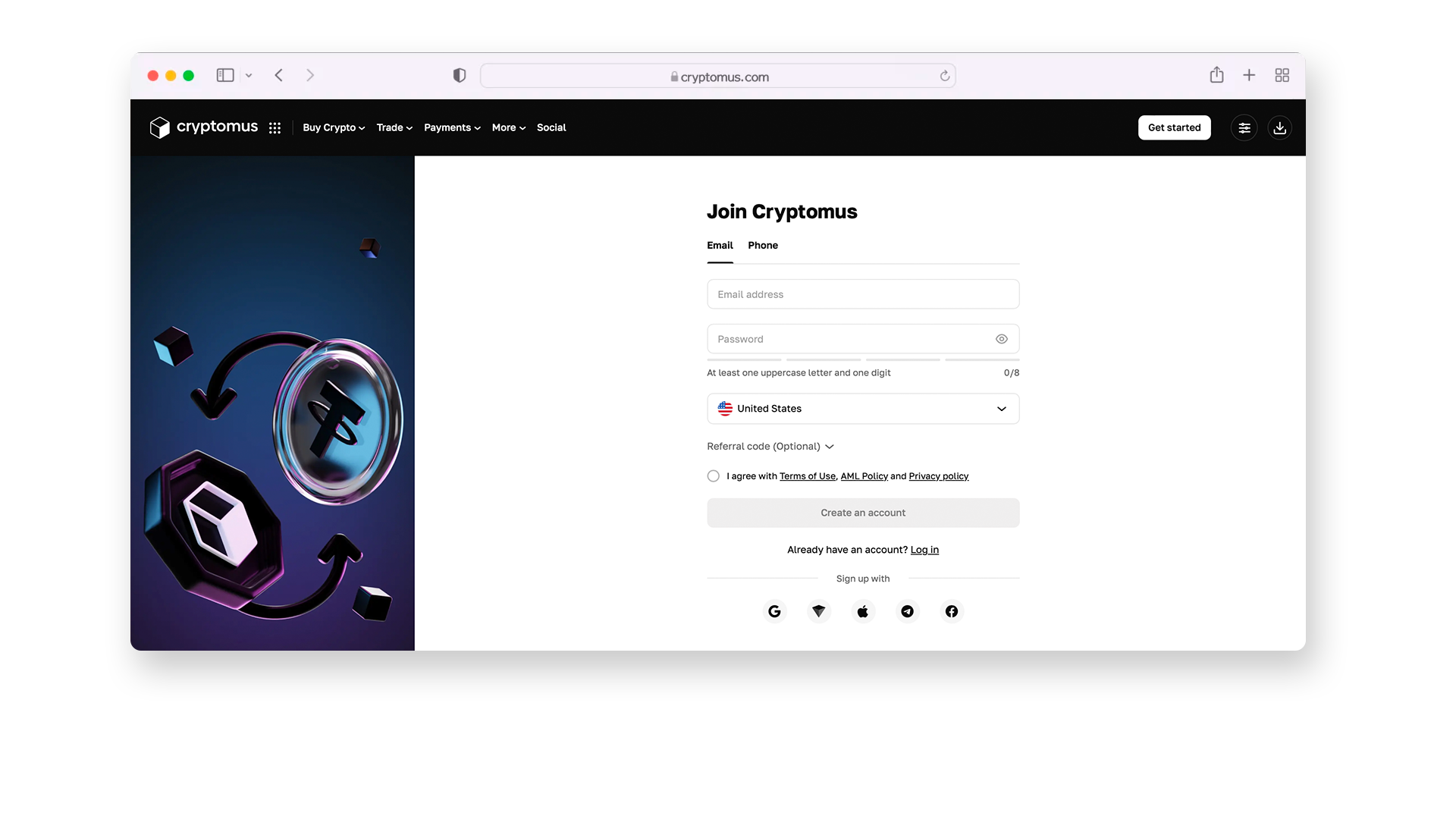
1. Account registration. Sign up on the platform and create an account by entering email and creating a password.
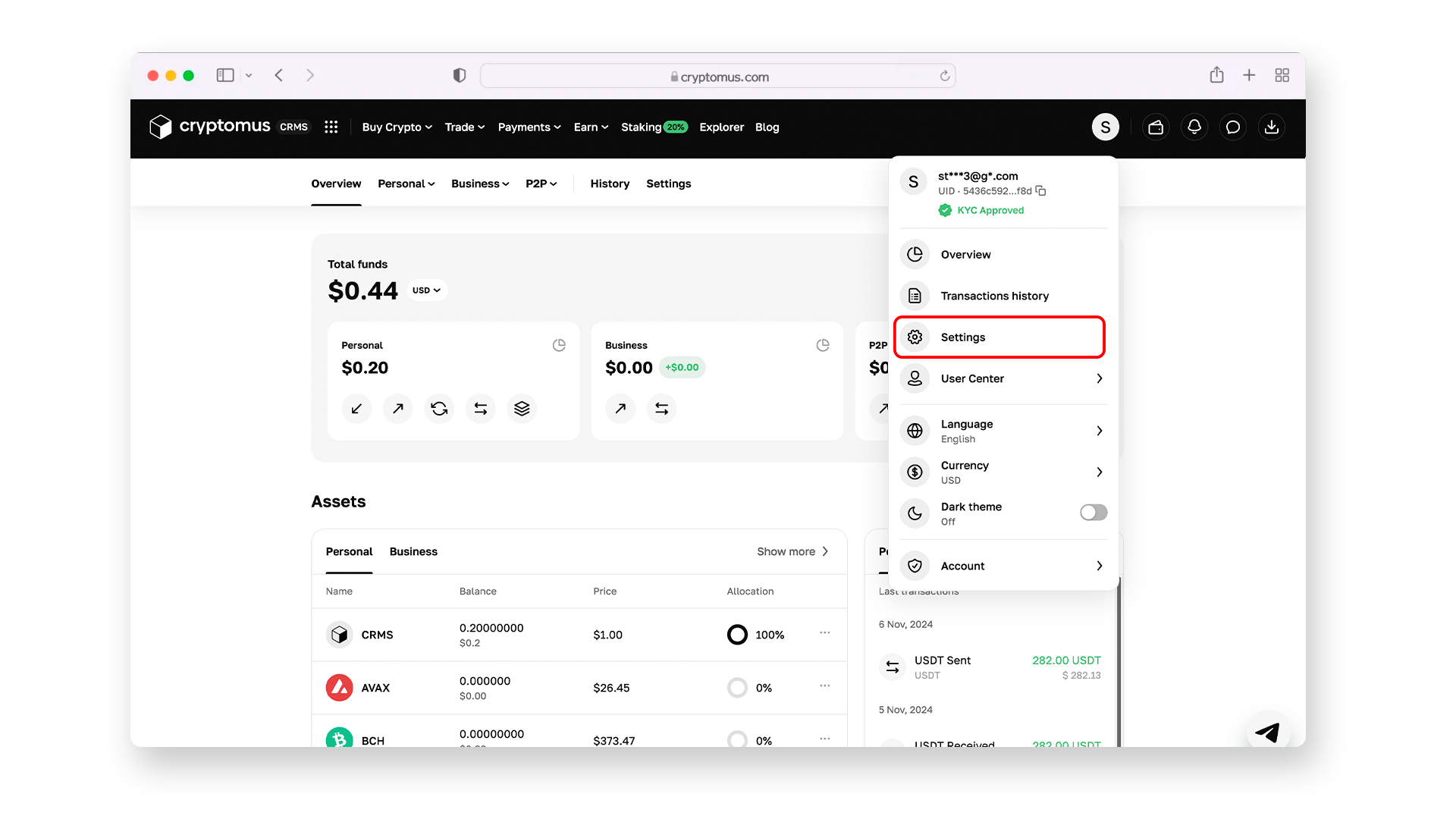
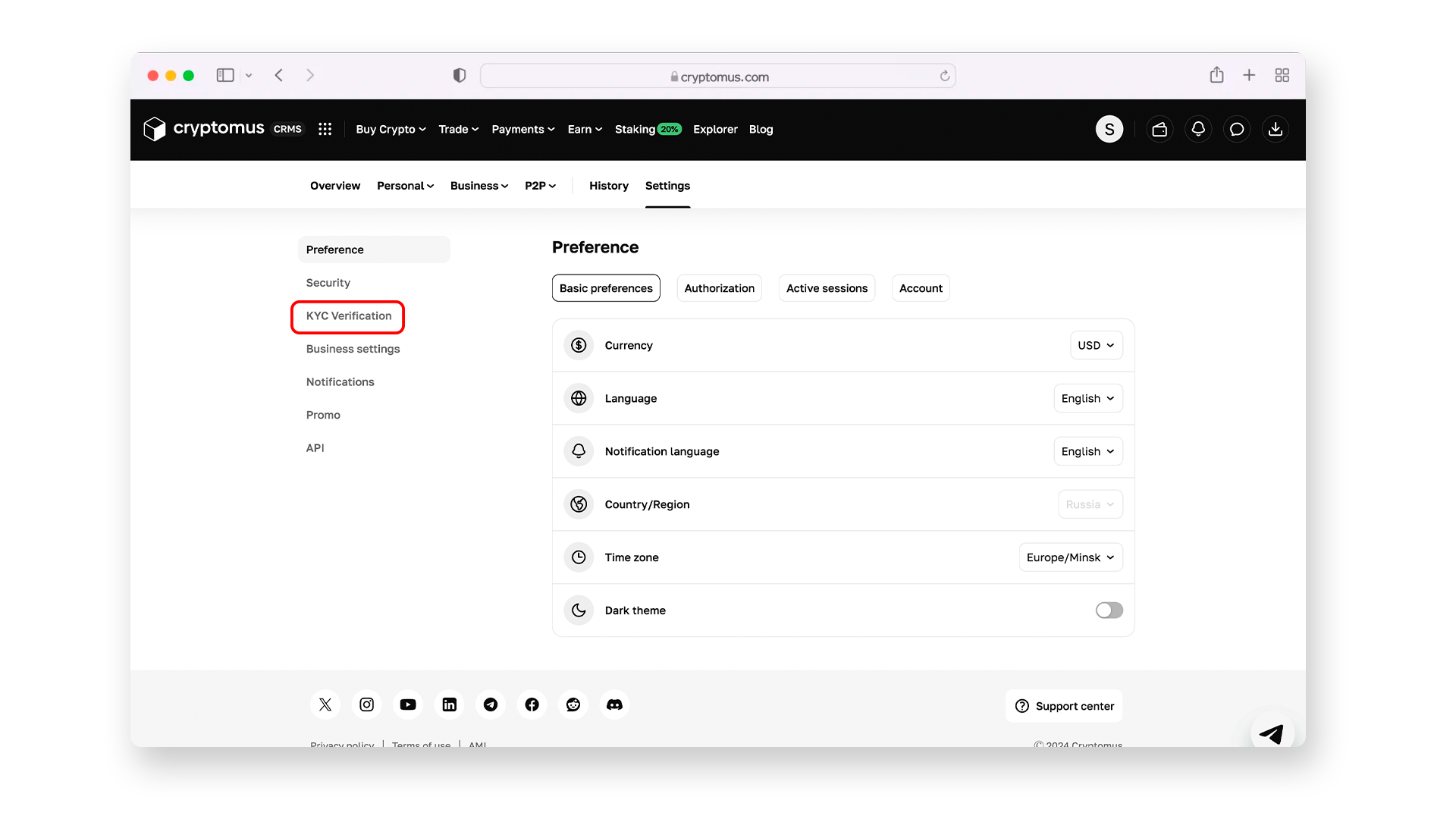
2. Security and moderation. You must activate two-factor authentication (2FA)—a measure with the one-time code from the app on your phone to log in to your wallet. Then, pass the KYC verification to unlock advanced automation features and withdrawals.
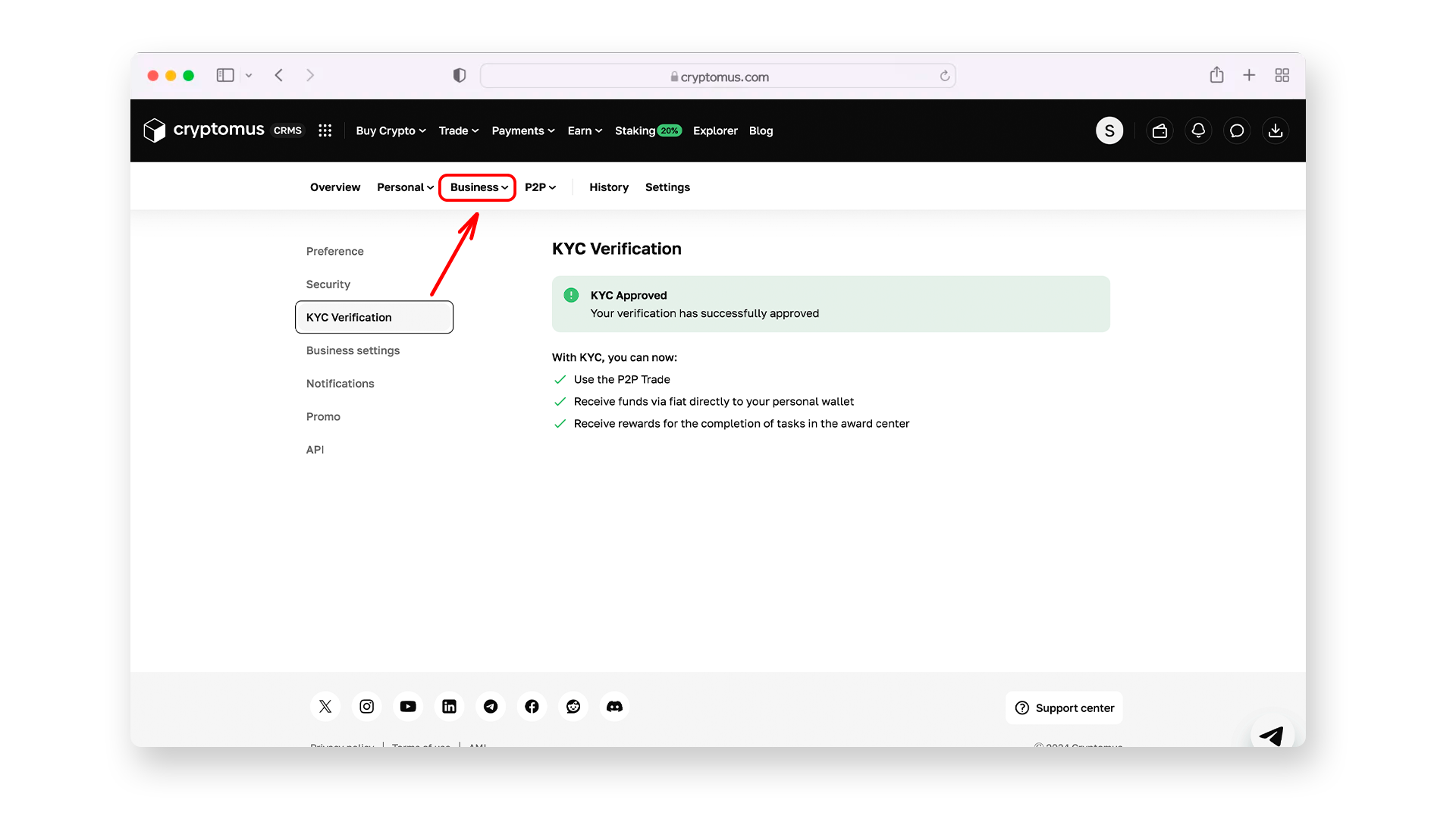
3. Creating a business profile. In the dashboard, go to the "Business Wallet" section. Here, you create a merchant account, set up a name (which will be visible to customers), and select basic payment gateway settings.
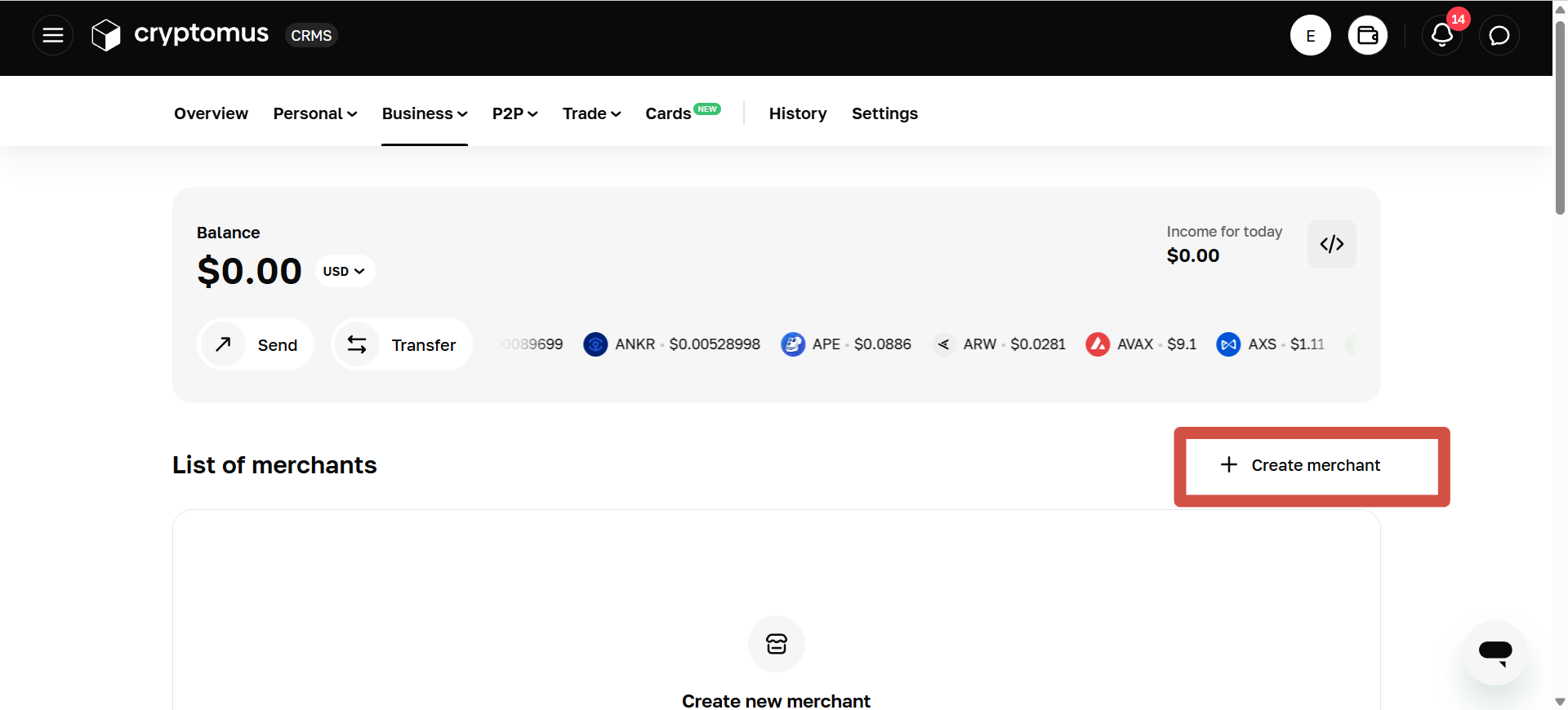
4. Integration and payment acceptance. Add a wallet to your website via a widget, plugin, or API. For example, on Cryptomus, you can choose from 20+ plugins or a simple-to-set API. Now you can accept cryptocurrency, use mass payouts, and manage your company's finances in real time.
5. System testing. Before launching full transactions, be sure to conduct a few test transactions with small amounts. This will help ensure that the system is configured correctly, funds reach the desired balance, and your employees understand how to process such inflows.
6. Customer notification. Tell your clients about the new payment option. You can send an email newsletter or post information on social media; this will attract a new audience and increase loyalty among existing users.
We hope this article helped you understand what a crypto wallet is for business and how to use it effectively for company growth. When choosing a specific solution, always consider your current needs—whether it's operational payment acceptance or long-term capital storage.
If you have any questions, please ask them in the comments!


