

Ethan Caldwell
Crypto specialist helping make complex crypto technologies easier to understand.
What Is an EVM Wallet?
EVM-compatible networks support a large part of today’s crypto activity. Blockchains that operate on the Ethereum Virtual Machine let users send tokens, use decentralized applications, and transfer assets between different ecosystems. To store and manage these tokens, you need a compatible EVM wallet. This guide explains what an EVM wallet is and how you can create one.
What Is an EVM?
EVM, or Ethereum Virtual Machine, is the system that runs smart contracts and processes transactions on the Ethereum blockchain. One important aspect of the EVM is its standardized framework. This allows other blockchains to integrate the same environment and continue working with Ethereum tools and decentralized applications.
In simple terms, the EVM works as the network’s computational layer. It handles the instructions of smart contracts and decentralized applications and records the outcome on the blockchain.
Rather than relying on one central server, the EVM functions through a global network of distributed nodes. Each node verifies and processes the same transactions. This approach improves the system’s resilience against tampering, outages, and single points of failure.
 The Best Ethereum Wallet For BeginnersCreate your ETH wallet on Cryptomus with a user-friendly interface, easy account top-ups, and a wide range of tools.
What Is an EVM Wallet?
An EVM wallet is a crypto wallet created to work with blockchains that run on the Ethereum Virtual Machine. It allows users to store, send, and receive assets that are compatible with EVM networks. These wallets also make it possible to connect to dApps operating within the same ecosystem.
At first glance, it works similarly to a standard crypto wallet. What sets it apart is support for several blockchains that use the same virtual machine standard. As a result, users can manage multiple tokens that follow the ERC-20 standard from one wallet, including:
- Ethereum.
- Polygon.
- BNB Chain.
- Avalanche C-Chain.
- Arbitrum.
- Optimism.
This structure removes the need to create separate wallets for each network. Users can switch between blockchains while keeping the same address and account. The same works for decentralized applications since many major DeFi platforms and NFT marketplaces are built on and fully support EVM networks.
Such wallets generally fall into two categories. Hot ones operate online and are usually available as mobile or browser apps, which makes them more user-friendly and convenient for daily use. Cold options are offline devices similar to USB drives that provide strong protection for long-term storage. For beginners or active traders, hot wallets are often a practical choice because many modern providers offer solid security along with simple access.
What Is an EVM Wallet Address?
An EVM wallet address is a unique identifier used to send and receive assets on EVM‑compatible blockchains. It is a long string of letters and numbers that begins with “0x” and is typically 42 characters in length. Here's an example of an EVM wallet address:
0x4cbe58c50480e9d56c0a1f8e7d3a1e2b9f4d7c8a
This address structure is shared across EVM networks. Thus, the same address can be used to receive assets on other compatible networks. However, selecting the correct network during a transfer is essential, as using the wrong one may result in lost funds. This address can also be shared with anyone who plans to send you tokens.
EVM Wallet Types
EVM wallets are usually divided into two main types.
-
Custodial: these manage private keys for you, making access to your crypto simpler. Many of them also include additional tools such as trading, staking, or portfolio management.
-
Non-custodial: those give you direct control over private keys, which brings more control but also means you are fully responsible for security. Losing the keys or failing to protect backups will result in permanent loss of funds.
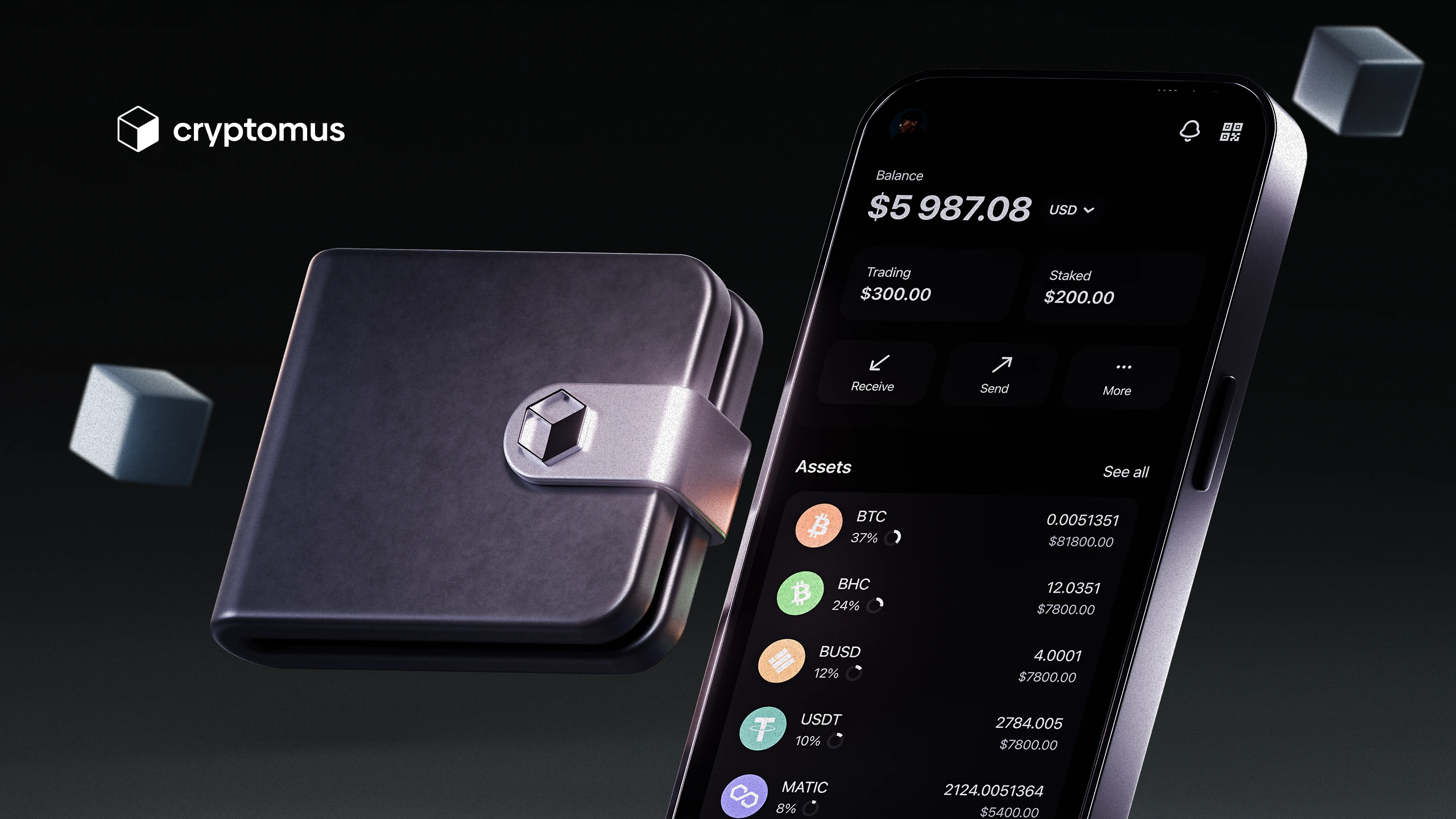
Both options are widely used, and there are many providers available. The decision mainly comes down to your priorities. It should be noted that Cryptomus has a custodial EVM wallet that can be a suitable choice for beginners due to its easy interface and solid security features. On top of that, it offers commission‑free transfers within the platform, along with features like a built‑in converter, a blockchain explorer, and access to both a spot exchange.
How to Create an EVM Wallet Step-by-Step?
Setting up a wallet can look a little different depending on the platform, but the general process is very similar. To create an EVM wallet, follow these steps:
- Pick a wallet provider.
- Create an account.
- Secure it with a PIN and enable 2FA.
- Complete KYC verification if required.
- Top up your wallet.
After that, you can send and receive assets or explore trading and staking features. The wallet address will be generated automatically, and you can find it in sections like "Receive".
Now you have a better understanding of what an EVM wallet is and how it can be used to manage tokens across several compatible networks. When picking a provider, pay attention to security features and extra tools such as staking, spot trading, or an integrated converter.
We hope this guide was helpful. You are welcome to leave questions or feedback below.


